Taking My Online Business to the Next Level: What I Learned from Marketing Essentials

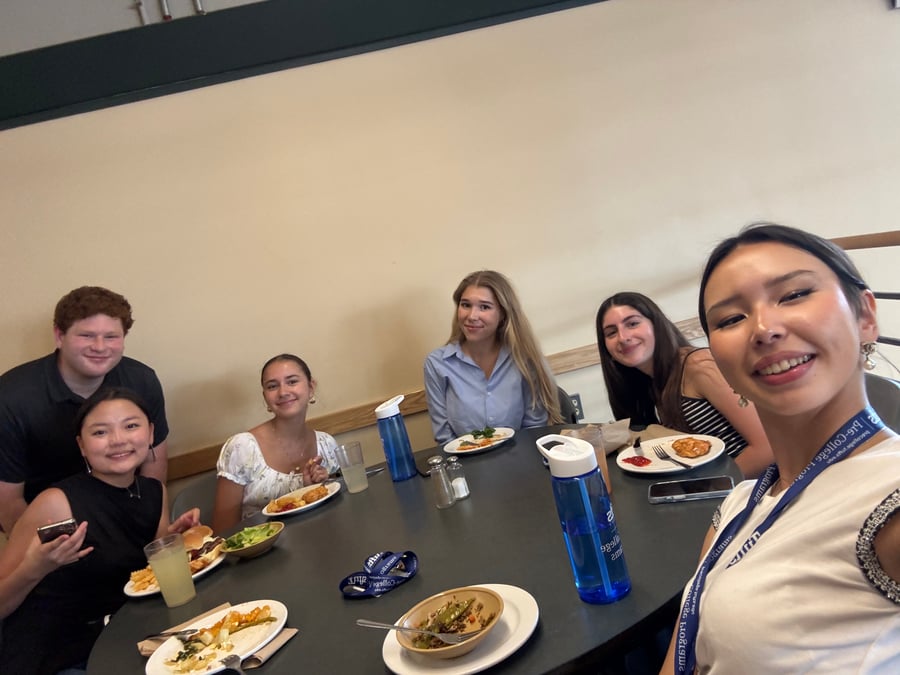
This summer, I had the opportunity to participate in Tufts University’s pre-college program. I chose Marketing Essentials. Why? Because I’ve run my own online business selling vintage clothing and toys for several years now. I reasoned that the session would help bring my fledgling business to the next level. And I believe what I’ve learned will do just that.
I’ve sourced everything from vintage Y2K fashions to 20th-century dolls, toys, and collectibles from yard and estate sales and church charity shops around my rural Vermont home. Vacations and weekend trips always include stops at multiple Goodwill and Salvation Army retail outlets. Some of my best finds have been at “bin” stores run by Goodwill in places like Savannah. In my old hometown of Harrisburg, Pennsylvania, I’ve found treasures at the local charity shop, Community Aid.
My online business has been profitable from the very first sale. But I came to realize that I needed to establish a brand presence. Ideally, I’d like to depend less on good descriptive sales pitches and serendipity to draw in new customers and more on becoming the place where those who know the type of vintage treasures I source and sell gravitate to see what I have on offer at any given time. A brand that buyers want to follow should increase sales and move inventory faster.
I arrived at Tufts with dual goals: to learn how to create a brand and explore the idea of collaboration. Here’s what I learned:
Brand development: For my business, sourcing hasn’t been a problem. I’m lucky to live in an area that, although rural, has a population that’s the right generational mix. Vermont tilts older, meaning that there are quite a few residents who are downsizing. Estate sales are big and loaded with clothing and toys from the 1930s to the Millennium. But I need a distinct brand.
Marketing Essentials gave me a ton of ideas, and I feel ready to create that distinct brand now. It won’t be the one my group developed during the course, but I’ve got the skills and practical knowledge to create my own unique business brand and persona.
Collaboration: Collaboration turned out to be harder than I thought. We were put into teams. As you can imagine, that meant that my group members had different perspectives, ideas, and interest levels. At first, no one seemed to be on the same page. And it was hard to get everyone to contribute equally to the final project. Some did far more work than others as we raced to complete our project. And that disappointed me. Lesson learned – if you or a team member isn’t passionate about a project, the project will suffer. I imagine that as a business grows, the business owner shouldn’t expect the same level of enthusiasm from employees as the owner has. Choose your partner well and don’t settle for a team member who hasn’t bought into the concept you’re developing.
Related Posts
Make Change for the Better: Leadership for Social Change
Jan 26, 2022
1 min read
This summer I participated in the Leadership for Social Change program with th.

A Glimpse into College Life: Lab, Campus, and Connection
Dec 12, 2025
1 min read
This summer, I had the incredible opportunity to attend the Lab Science Invest.
